Jezzine, Southern Lebanon Shortly before noon on Saturday, 28 March, four precision missiles struck a car on the Jezzine highway in southern Lebanon. The strikes were conducted by the Israel Defense Forces (IDF), specifically the air force. The vehicle was clearly marked as press. Inside were three journalists on their way to cover the war. The car burnt. When paramedics arrived to pull the bodies from the wreckage, a second strike killed one of them. The decision to target a vehicle marked as press, and then to strike again when paramedics arrived, reflects either a deliberate policy or a set of rules of engagement that permits such strikes when the military designates an occupant as a “terrorist”. This occurs regardless of the civilian or press status of others in the vehicle. The IDF’s justification that one journalist was a Hezbollah operative is the same framing Israel has repeatedly used to justify strikes on media workers in Lebanon and Gaza. Critics, press freedom organisations and international law experts argue that even if that claim were true, it does not legally justify killing the other journalists in the car, nor does it justify striking the paramedics who responded. Mourners at the coffin of Beirut-based Al Mayadeen TV reporter Fatima Ftouni during her funeral in the Choueifat district on the outskirts of Beirut on 29 March 2026. (Photo: EPA / Wael Hamzeh) This is the story of those three journalists and it should not need to be explained why it matters. And yet, in the days since, it has gone largely unremarked upon across the Western press. It has gone unlamented by governments that describe themselves as champions of a free media. It remains unread by audiences who, it seems, have quietly decided that the deaths of journalists in Lebanon or in Gaza no longer constitute news. There are too many, and the names get lost in the clutter of endless bodies. Their names were Ali Shoeib, Fatima Ftouni and Mohamed Ftouni. Let us pause for a while. Ali Shoeib (1970s-2026) Correspondent, Al-Manar Television Ali Shoeib was a veteran of Lebanon’s wars and the uneasy silences between them. He spent nearly three decades as a television correspondent in Southern Lebanon. He gave his first live broadcast in July 1993 from a hill in a southern village. He set up the camera himself and spoke from the ground as events unfolded during the Israeli occupation. He had never appeared on screen before that moment. Journalists Fatima Ftouni and Ali Shoeib. (Photo: X / @MehrnewsCom) He remained at his post for the next 33 years. At the time of his death he was one of the most recognisable voices in Lebanese broadcast journalism. He had covered events his younger colleagues had only read about in textbooks, including the Israeli withdrawal in 2000 and the war of 2006. He worked for Al-Manar, the Hezbollah-affiliated broadcaster. In the fragmented and politically charged scene of Lebanese media, this is simply a fact. It is a fact in the same way the BBC’s alignment with British state interests is a fact. Those who collaborated with him say he knew the south as a resident who had earned the trust of his community over decades. The IDF, in confirming the strike, described him as a member of Hezbollah’s elite Radwan Force. They claimed he had operated for years under the guise of a journalist. No evidence was provided. The IDF subsequently posted a photograph on X showing Shoeib in military uniform. It later emerged, through questioning by Fox News, that the image had been fabricated. The IDF’s own spokesperson eventually acknowledged that the photo had been Photoshopped. Shoeib was in his fifties. He leaves behind a body of work that documented 30 years of a country’s torment, and a lie posted about him on the internet by the army that killed him. Fatima Ftouni (1995-2026) Correspondent, Al Mayadeen Television Fatima Ftouni was 30 years old. She had already lost more than most people lose in a lifetime. She was born in 1995 in southern Lebanon, a region that has been at war for most of her life. She studied journalism at the Lebanese International University and joined Al Mayadeen as a field correspondent. Journalist Fatima Ftouni. (Photo: X / @ftounifatima) Colleagues speak of her ability to convey the human realities of conflict without slipping into sentimentality. In early March 2026, just weeks before she died, an Israeli air strike killed her uncle and his entire family in the southern Lebanese village of Toul. Seven members of the Ftouni family died in that strike. She reported the news herself, live on air. She maintained her composure while describing the deaths of her own relatives. The broadcast circulated widely as a devastating piece of television journalism. It showed a reporter narrating the destruction of her own family. On 28 March, she was in a press vehicle with her brother and Ali Shoeib. Four missiles hit the car. According to Al-Araby TV journalists who arrived at the scene afterwards, Fatima survived the initial strike. She got out of the wreckage and walked several metres, trying to flee. A second strike killed her. Mohamed Ftouni (1997-2026) Camera operator, Al Mayadeen Television Mohamed Ftouni was Fatima’s younger brother. He graduated from the Lebanese International University and chose to work behind the lens. He operated alongside his sister in the same dangerous spaces she reported from. Camera operator Mohamed Ftouni. (Photo: Facebook / Junaid Kashmiri) He died alongside her on the Jezzine road. They were siblings who had chosen the same work and who were killed doing it together. The IDF has not commented on his death or on Fatima’s. It is not clear whether this is a specific policy, general indifference or a recognition that there is no propaganda value in acknowledging them. The silence that follows Their funerals were held the following day. Rain poured as their bodies were carried through the cemetery in Choueifat, south of Beirut. They were draped with flags bearing the names of their news outlets. The destroyed vehicle hit by an Israeli strike that was carrying Ali Shoeib, Fatima Ftouni and her brother, Mohammed Ftouni, in Jezzine, Southern Lebanon, on 28 March 2026. (Photo: EPA / Stringer) A member of the Union of Journalists in Lebanon carries a picture of Ali Shoeib and Fatima Ftouni during a solidarity stand at Martyrs’ Square in Beirut condemning the Israeli air strike that hit their vehicle in Jezzine, Southern Lebanon. (Photo: EPA / Wael Hamzeh) In death, they were not anonymous to the communities they had reported for or to the colleagues who had collaborated with them. However, they are seemingly irrelevant to the readers of the major Western outlets. These organisations would typically devote considerable space to the killing of journalists they regard as their own. This is called ordo amoris (order of love). This concept from Augustine of Hippo suggests that moral life depends on loving people in the right proportion. This hierarchy of grief explains why some deaths are treated as tragedies while others are treated as statistics. There are several explanations for this. One is that Shoeib, Fatima and Mohamed worked for outlets considered hostile to Western interests. This matters to how their deaths are categorised by disconnected consumers of news. But a journalist’s protection under international law does not depend on whether their employer is congenial to Washington or London. A burned press helmet next to a destroyed vehicle hit by an Israeli strike that was carrying Ali Shoeib, Fatima Ftouni and her brother, Mohamed Ftouni, in Jezzine, Southern Lebanon, on 28 March 2026. (Photo: EPA / Stringer) The fabricated photograph of Shoeib was not a simple communications failure. As Associate Professor Timothy Graham of the Queensland University of Technology put it, the strategy relies on the fact that a correction never catches the lie. By the time it does, it no longer matters. The lie is seen by millions, while the correction is seen by thousands. That function is precisely what makes journalists targets. When you kill enough of them, the events you are responsible for become easier to describe however you wish. DM
IN MEMORIAM : War of silence: Why the journalists killed in Lebanon are irrelevant to Western readers
Herman Lategan ·
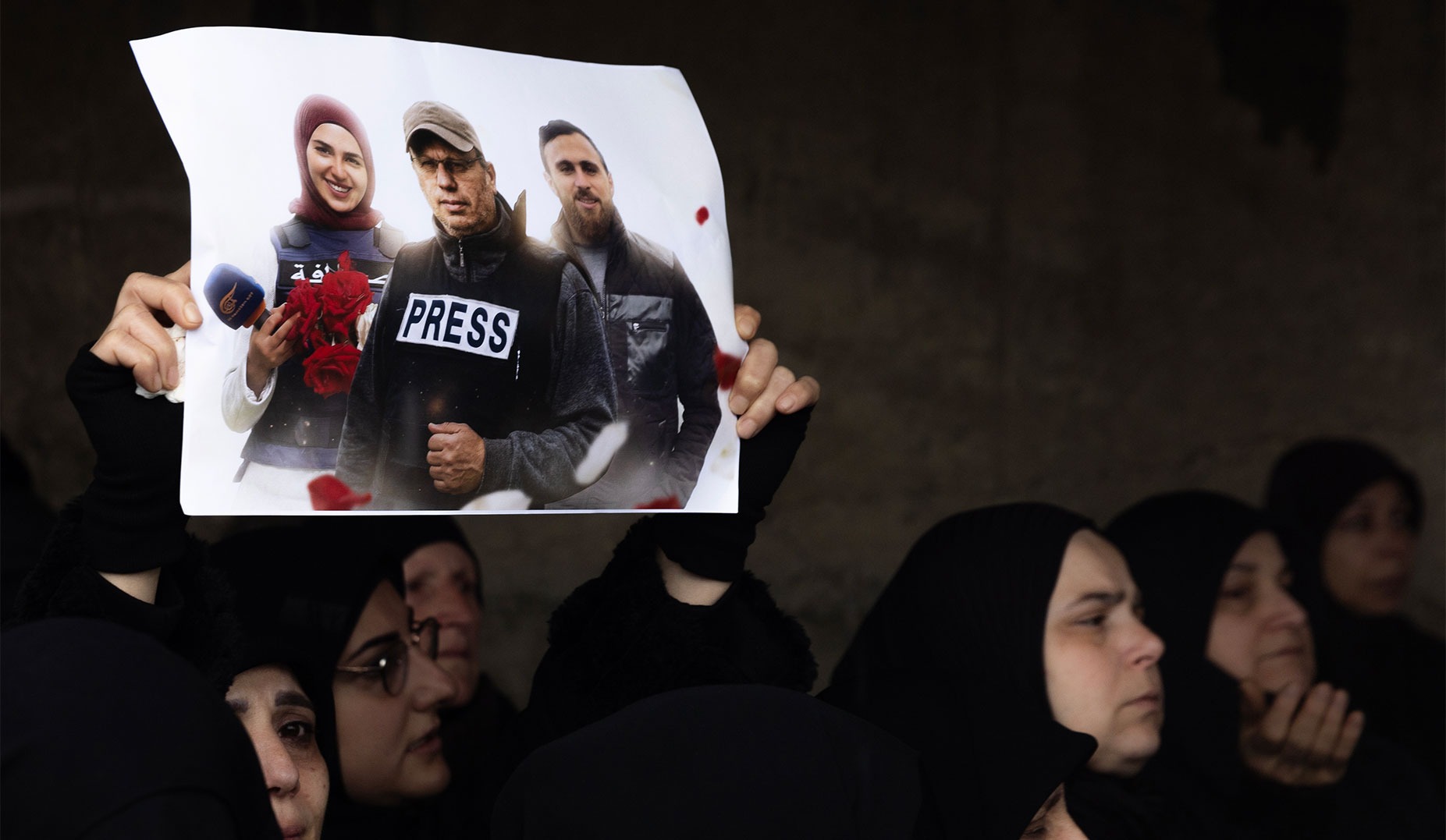
Their deaths have gone largely unremarked upon across the Western press, unlamented by governments that describe themselves as champions of a free media and unread by audiences who seem to have quietly decided that the deaths of journalists in Lebanon or in Gaza no longer constitute news.
Source: Daily Maverick